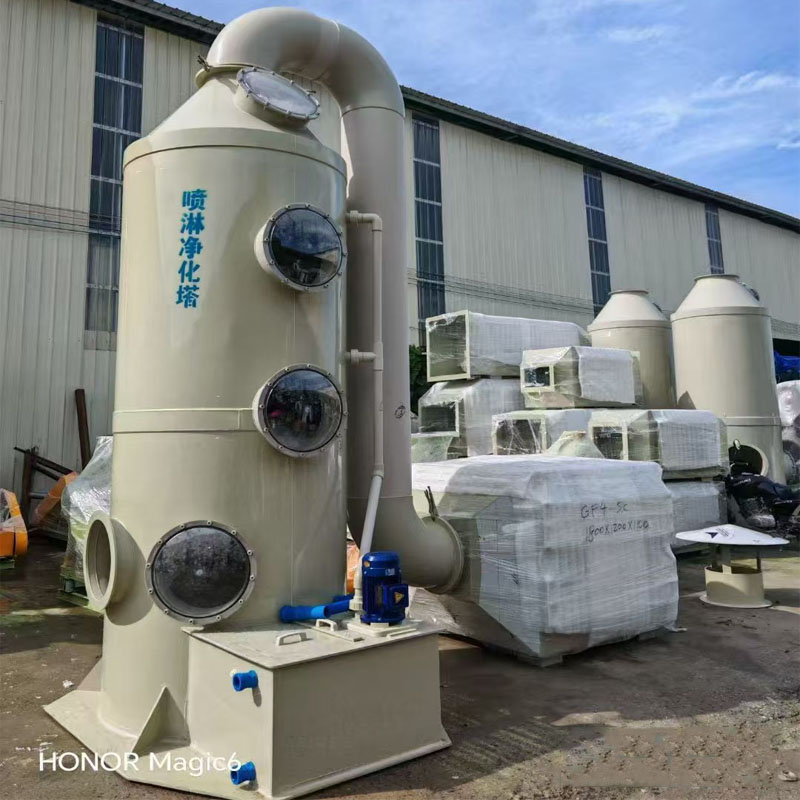
Spray Tower Product Description
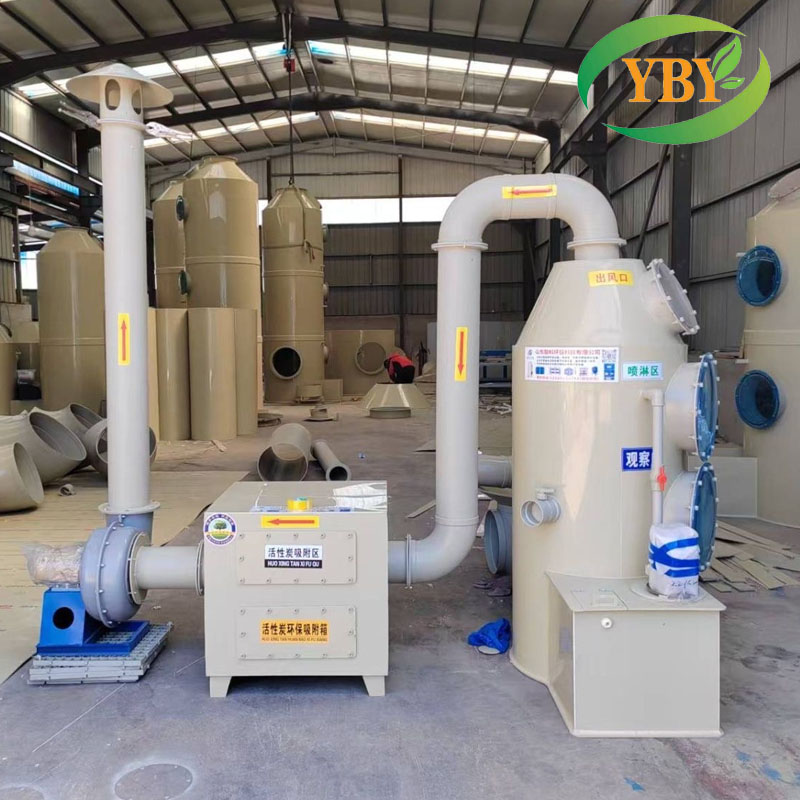
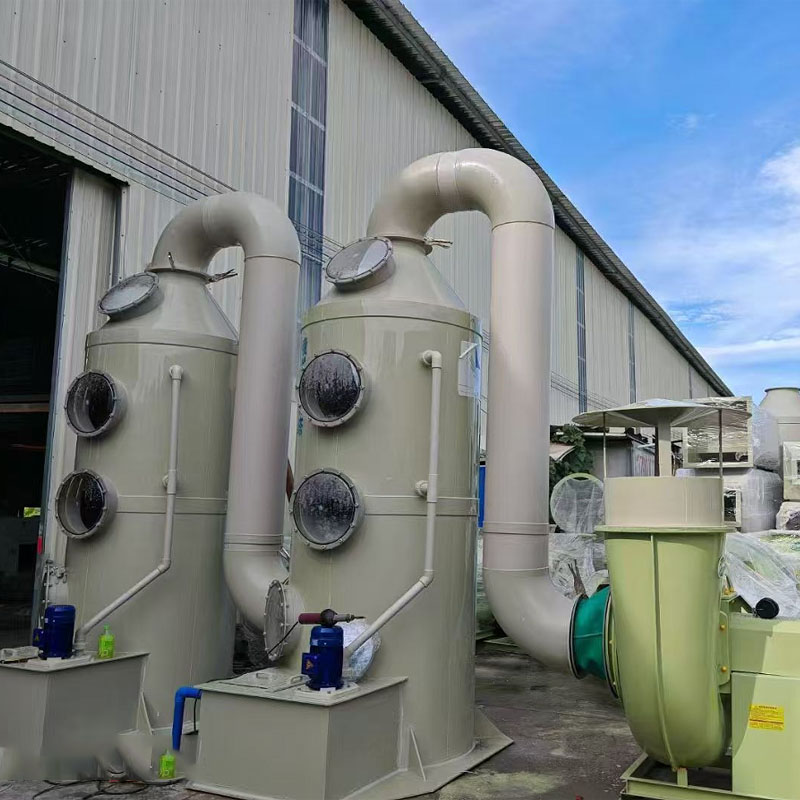
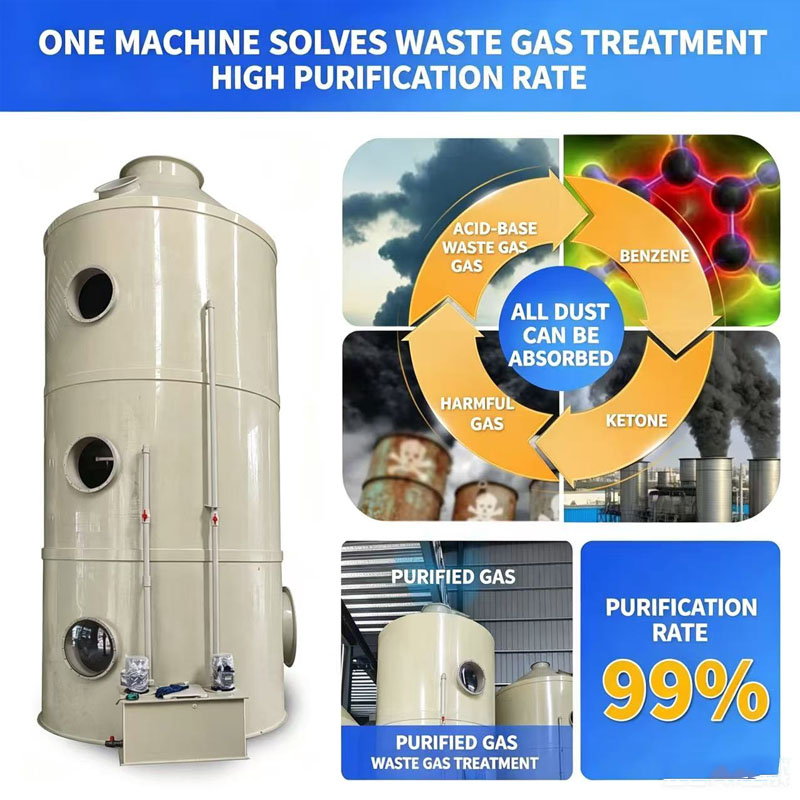
A spray tower is a vertical chamber that facilitates mass transfer between a gas stream and a liquid spray for pollution abatement. Its operation is based on direct impingement scrubbing.
Key features include adjustable liquid flow rates, low-pressure drop design, and easy maintenance access for reliable long-term operation.
Perfect for chemical processing plants, power generation facilities, and manufacturing operations requiring effective air pollution control solutions.
Spray Tower Working Principle
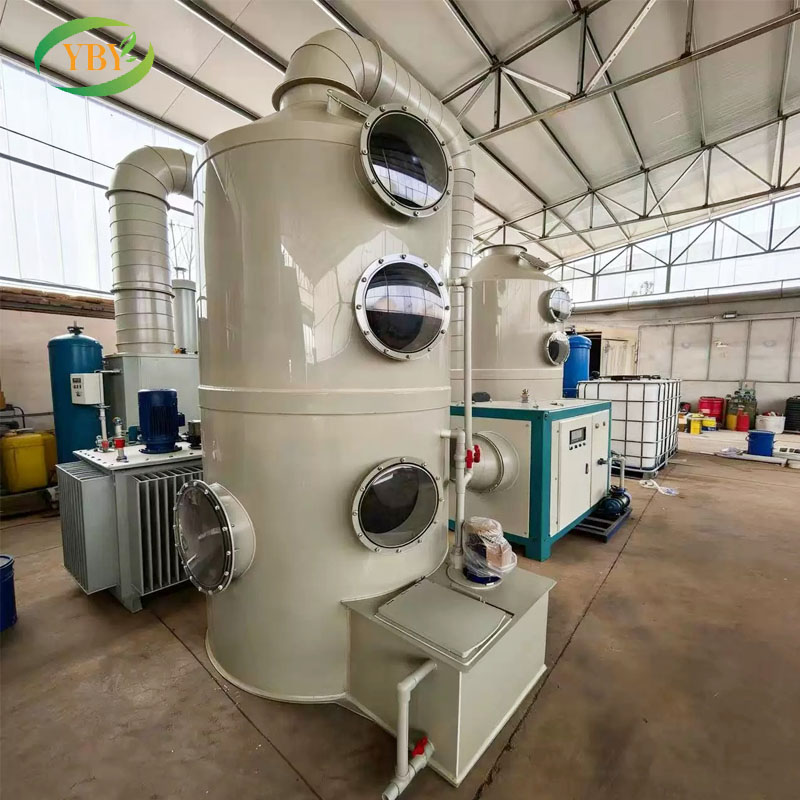
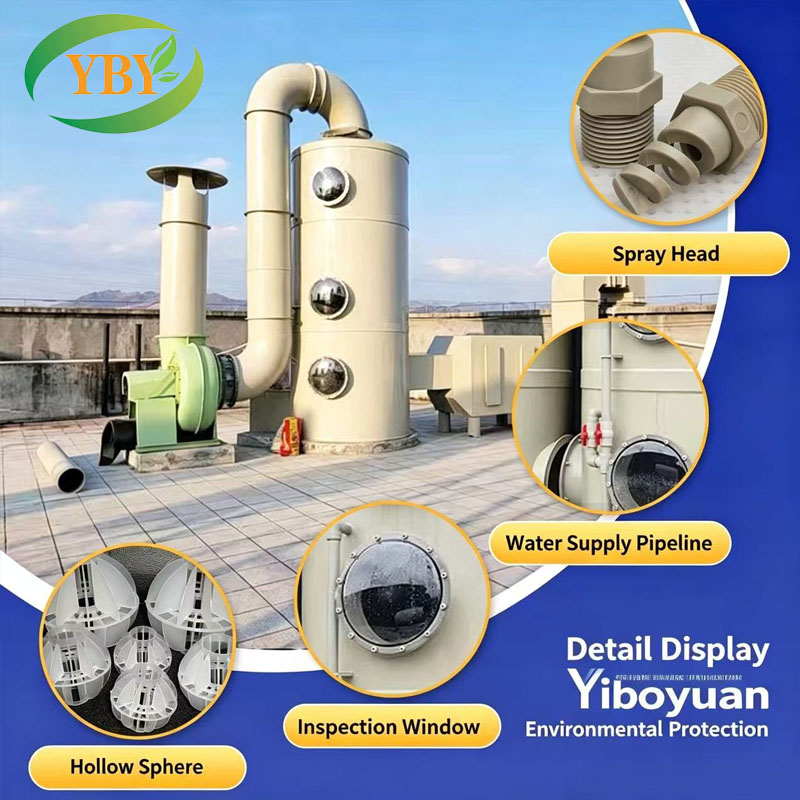
The acid mist exhaust gas is introduced into the purification tower through the air duct, passes through the filler layer, and the exhaust gas and the sodium hydroxide absorption liquid undergo gas-liquid two-phase. Full contact with the absorption and neutralization reaction. After the acid mist exhaust gas is purified, it is dewatered and defogged by a demister plate and discharged into the atmosphere by a fan. The absorption liquid is sprayed down on the top of the tower after being pressurized by a pump at the bottom of the tower, and finally returned to the bottom of the tower for recycling. The purified acid mist exhaust gas meets emission standards.
Features of the scrubber tower
1.Dust removal and desulfurization efficiency is high. When alkaline washing water is used, the desulfurization efficiency can reach 85%.
2. The equipment occupies less land and is easy to install;
3. Low water and power consumption indicators;
4. Corrosion resistance, no wear, and long service life;
5. Reliable equipment operation, simple and convenient maintenance.
Washing Tower Installation Instructions
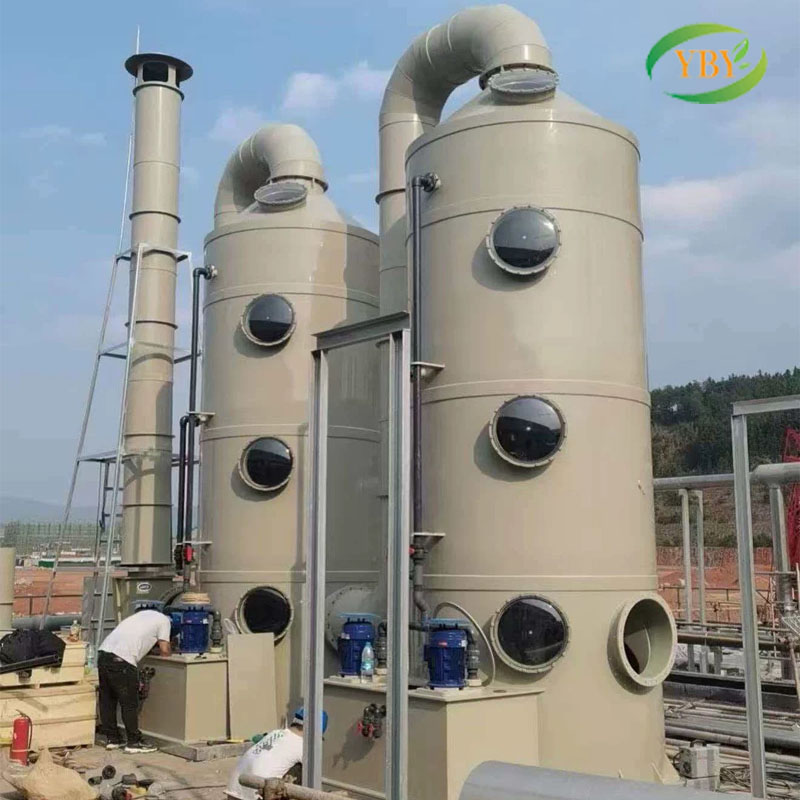
1. Regulation of circulating water volume: It is determined by the spray tower water supply pump. When one boiler is running, one can be turned on. When two or three are running at the same time in winter, both water pumps are turned on, and the mud pump is at its flow rate. It should be adjusted according to the flow of the circulating pump to make them equal.
2. Dosing volume in the dosing tank in the spray tower: When operating a boiler, add 2 bags of alkali and 5 bags of slaked lime. If two or three units are operated in winter, the dose can be increased by a corresponding multiple.
3. The spray tower sedimentation tank should be cleaned frequently, once a week in summer and once every three days in winter.
4. When the gray water separator discharges sewage, it is discharged once per shift, and the sewage valve should be opened separately until clear water is discharged.
5. The above rotating parts should be frequently checked and filled with oil, and the faults should be eliminated in time to ensure the desulfurization effect of the spray tower.
6. Pay attention to safety when adding medicine on the stairs and down stairs, and have independent security and mutual security awareness.
7. washing water after the work is completed, the sanitation should be cleaned up in time so that people can clear the site.
Washing tower process breakdown
1. Gas inlet: the hot, contaminated gas stream is often introduced at the side near the bottom of the tower. A quench section may be present to saturate and cool the gas first, protecting the structure and improving removal efficiency.
2. Liquid spray system: one or multiple levels of spray nozzles are installed at various heights within the tower. These nozzles atomize the scrubbing liquid into a high-density mist of fine droplets, providing a massive surface area for gas-liquid contact.
3. Counter-current flow: the gas flows upward, opposing the downward flow of the spray. This design maximizes the concentration gradient for absorption, making it highly efficient for gas removal, as the cleanest gas meets the freshest scrubbing liquid at the top.
4. Pollutant removal:
· For particulates: inertial impaction is the primary collection mechanism. As particles in the gas stream deviate around water droplets, those with too much inertia cannot follow the streamlines and collide with the droplets.
· For gases: absorption occurs as soluble acid gases (like SO2HCL) dissolve into the alkaline scrubbing liquid (which may contain caustic soda, lime, or limestone slurry).
5. Demister/mist eliminator: at the top of the tower, a section of chevron blades or a mesh pad (demister) removes entrained water droplets from the now-cleaned gas stream before it is exhausted by a fan to the atmosphere.
6. Sump and recirculation: the water, now containing the captured pollutants, collects in a sump at the bottom. It can be bled off for wastewater treatment, while fresh makeup water is added. In many systems, the water is recirculated to conserve water and chemicals, though this requires management of dissolved solids and ph.
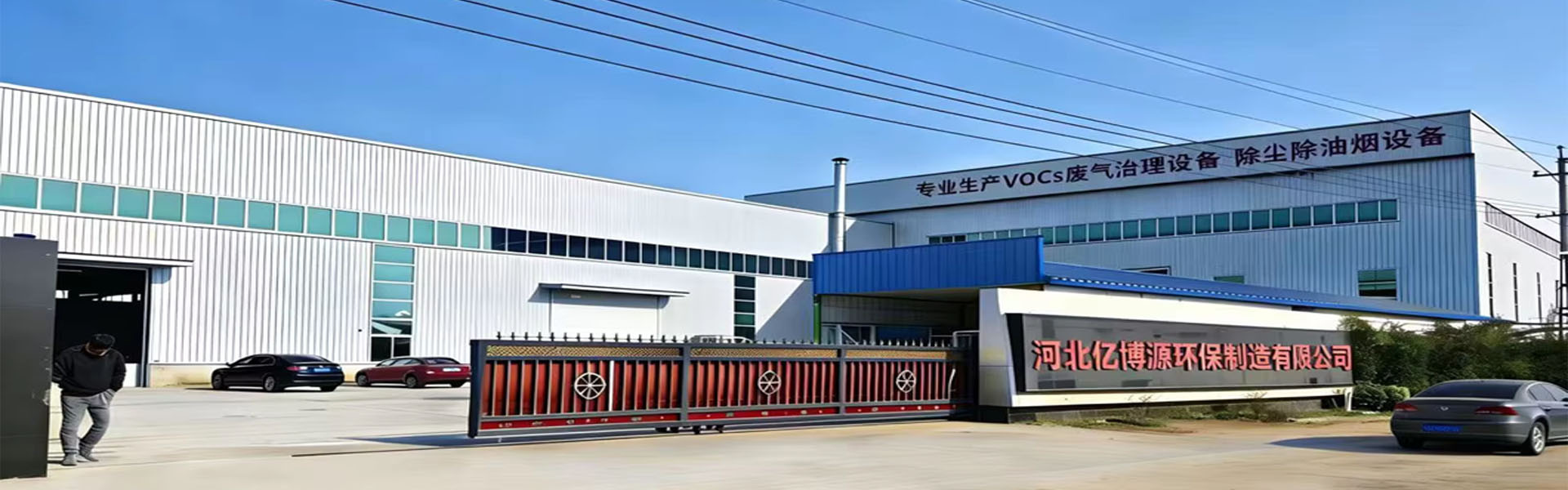
Hebei Yiboyuan Environmental Protection Machinery Manufacturing Co., Ltd. – Factory Introduction
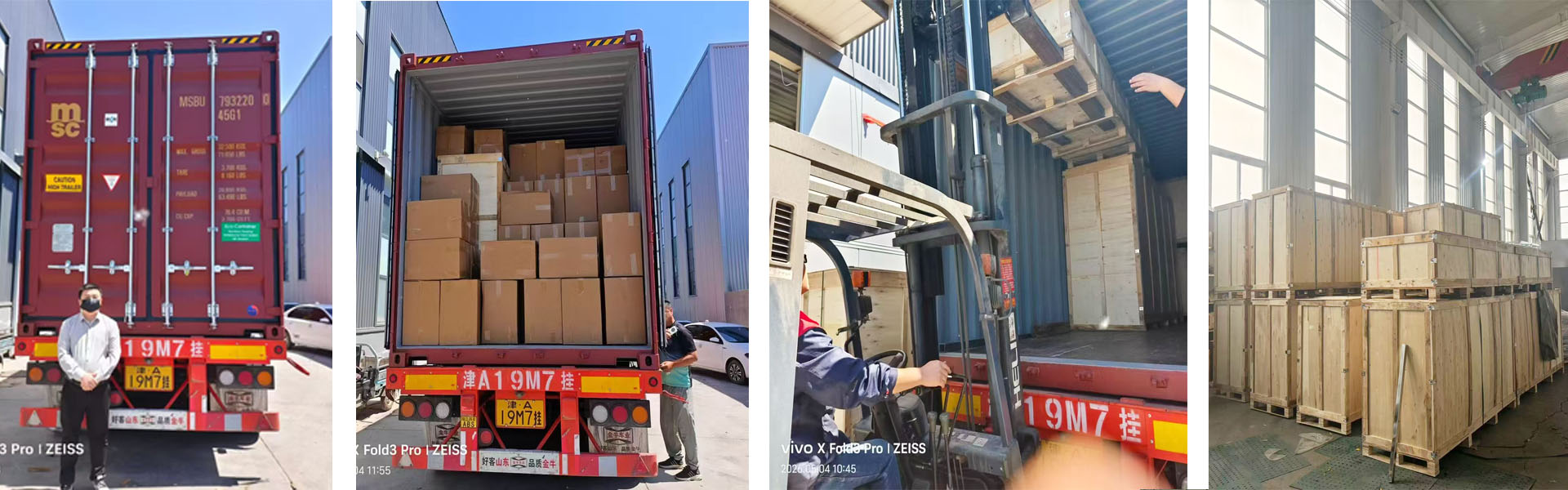
Packaging & Shipping
Client visit
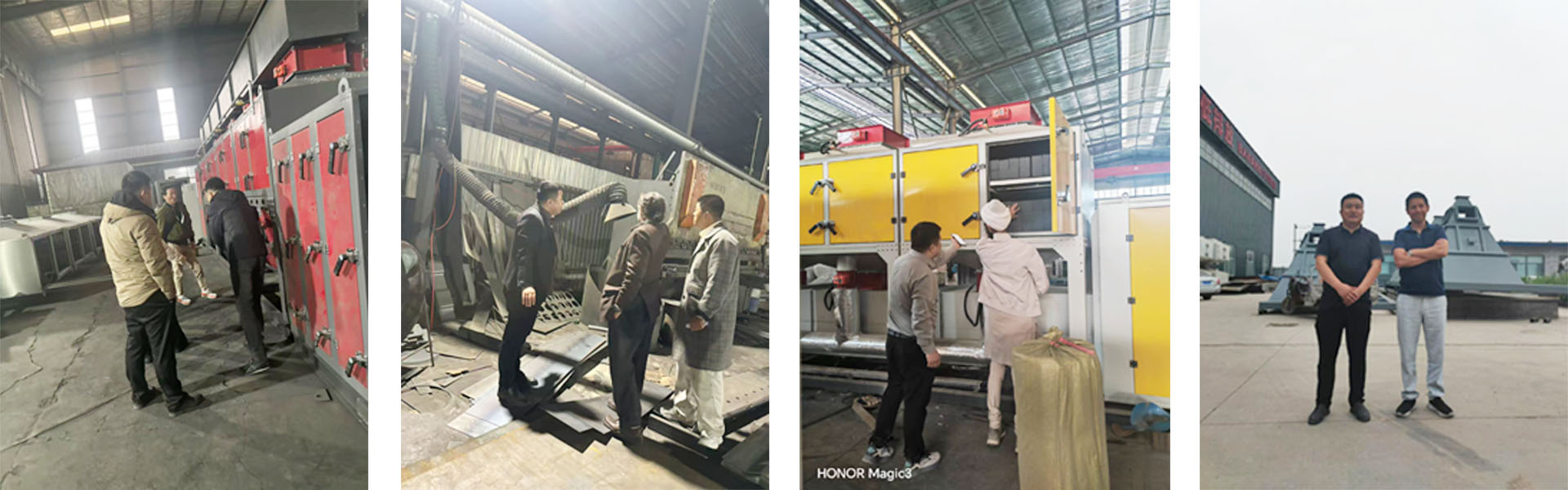
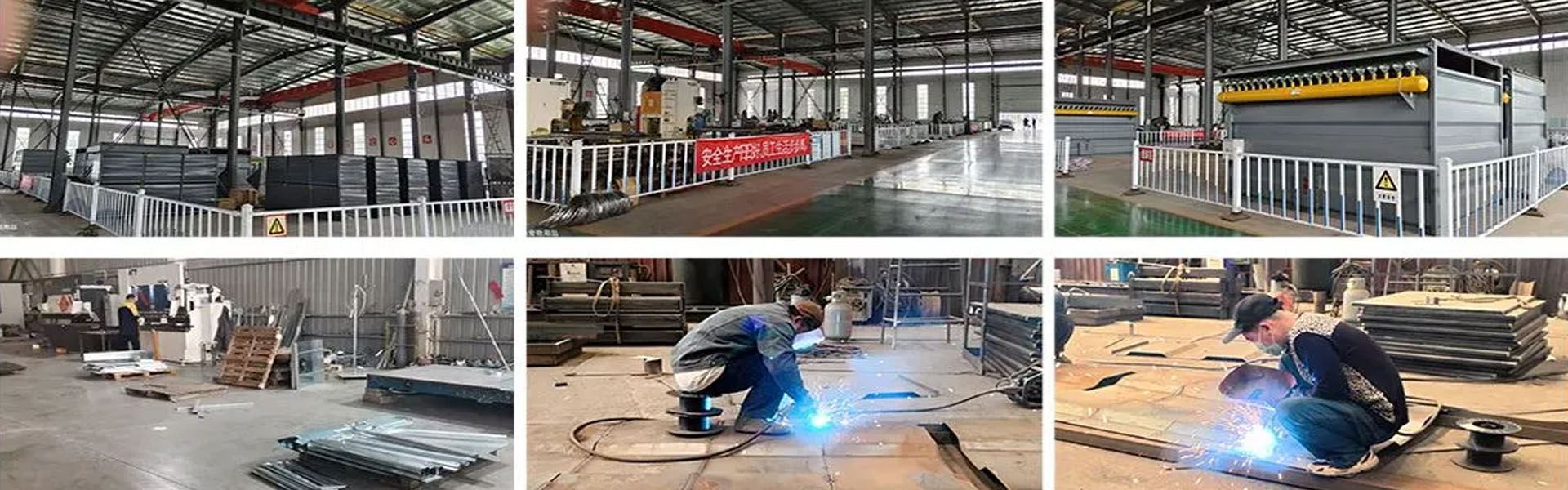
Workshop display